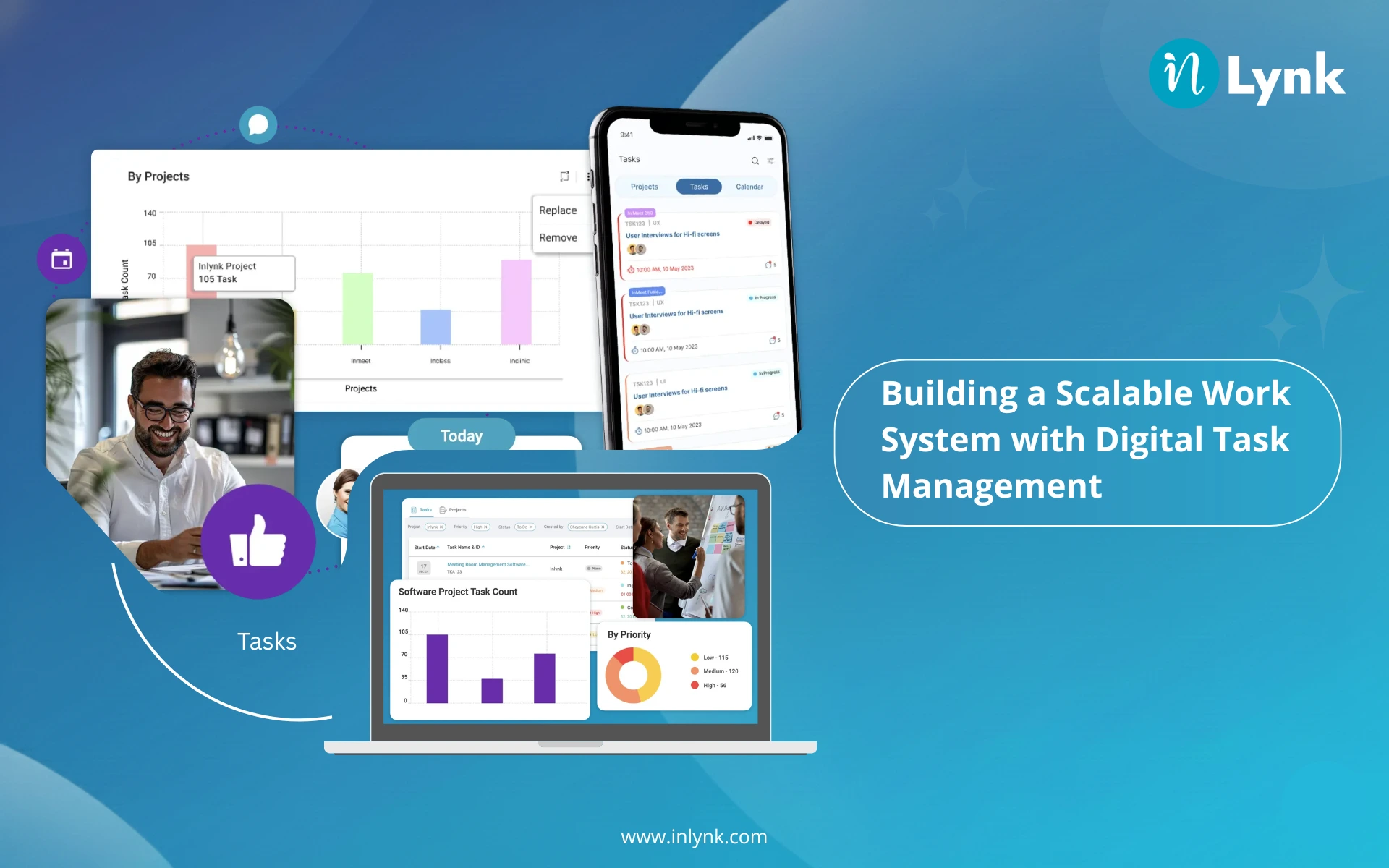
As organizations grow, managing work becomes more complex. Tasks increase, teams expand, and coordination starts taking more time than execution. Many teams struggle not because of lack of effort, but because their work systems are not designed to scale.
A scalable work system is built on clarity. It defines how tasks are created, assigned, tracked, and completed. This is where digital task management becomes essential. It brings structure, visibility, and ownership into everyday work.
Table of the Content:
- Why Scalability Breaks Without a Structured Work System
- What a Scalable Work System Looks Like in Modern Teams
- Why Traditional Task Tracking Does Not Scale
- Traditional Task Tracking vs Digital Task Management
- How Digital Task Management Supports Business Growth
- Why Digital Task Management Works Best Inside a Digital Workspace
- How Modern Digital Workspaces Manage Tasks Efficiently
- Managing Tasks Inside a Unified Digital Workspace
- Improving Team Accountability Without Micromanagement
- Measuring Task Progress as Teams Scale
- Building Long Term Scalability with the Right Task Management System
- Conclusion: Scaling Work Starts with Task Clarity
- FAQ
Why Scalability Breaks Without a Structured Work System
In small teams, work often flows through informal communication. A quick message or reminder is enough. As teams grow, this approach creates confusion and delays.
Tasks begin to spread across emails and chats. Ownership becomes unclear. Deadlines are missed. Managers spend more time following up than enabling progress.
Without a structured system, growth increases chaos instead of productivity. A scalable work system needs clarity built into daily operations.
What a Scalable Work System Looks Like in Modern Teams
A scalable work system supports growth without increasing friction. It focuses on how work flows across teams, not just who does the work.
At its core, a scalable system ensures that work is organized, visible, and repeatable. Teams understand what needs to be done, who owns it, and how progress is tracked. A digital workspace supports this by bringing people, tasks, and communication into one environment.
Why Traditional Task Tracking Does Not Scale
Many teams still rely on to do lists, spreadsheets, and emails to manage daily work. While these methods may work for small teams, they fail quickly as the number of tasks and dependencies increase. Research from McKinsey shows that employees spend nearly 20 to 30 percent of their work time searching for information or following up on tasks, largely due to fragmented work systems.
In addition, data from the Asana Work Index reports that more than 60 percent of teams continue to manage tasks through emails or spreadsheets, which lack real time visibility and clear ownership. As a result, tasks get buried, deadlines are missed, and progress depends heavily on manual follow ups.
These traditional task tracking methods were never designed to support growing teams. As organizations scale, the lack of structure, visibility, and accountability creates delays and confusion instead of efficiency.
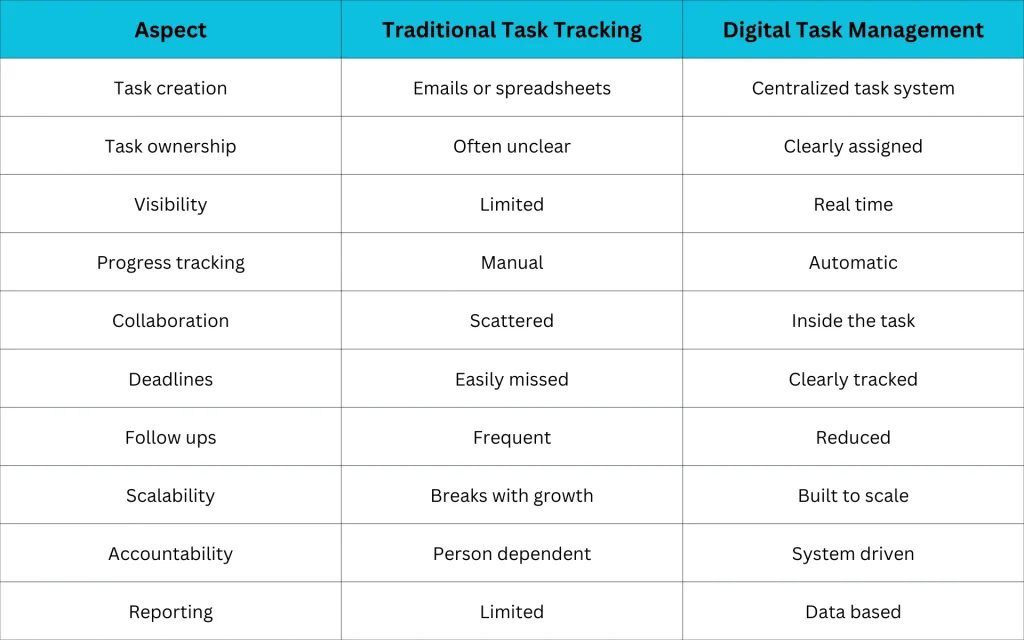
Traditional Task Tracking vs Digital Task Management
This is one place where a clear comparison helps decision making.
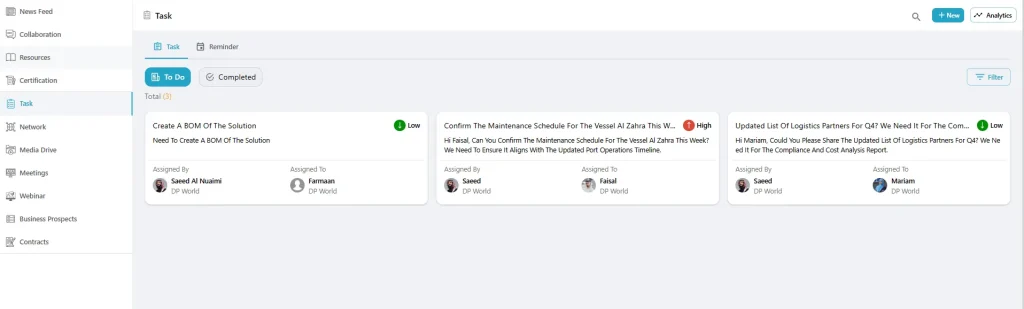
inLynk Digital task management dashboard showing centralized task tracking and ownership
How Digital Task Management Supports Business Growth
Digital task management turns everyday work into a structured process. Conversations become actions. Actions become measurable outcomes.
It helps teams:
- Reduce time spent on coordination
- Improve clarity around ownership
- Maintain visibility as work increases
This directly supports productivity and consistent delivery across teams.
Solutions like inLynk Task Management are built to support this shift by offering task creation, assignment, and tracking inside a unified environment.
Why Digital Task Management Works Best Inside a Digital Workspace
Task management delivers the most value when it is part of a broader digital workspace.
In a unified digital workspace, tasks remain connected to discussions and files. Teams do not need to switch between tools to understand context. Everyone works from a single source of truth.
A digital workspace platform like inLynk brings these elements together, helping teams manage work from one place instead of juggling multiple systems.
How Modern Digital Workspaces Manage Tasks Efficiently
Modern digital workspaces combine task management, collaboration, and visibility into one system.
This setup allows tasks to be created directly from conversations, updated in real time, and discussed within the task itself. As a result, work stays organized and workflows remain clear even as teams scale.
Managing Tasks Inside a Unified Digital Workspace
Inside a unified workspace, digital task management becomes simple and transparent.
Teams can create tasks from conversations, assign owners and due dates, and track progress from a central view. Communication stays focused within tasks, reducing noise and confusion.
This approach supports team task management without adding complexity.
Improving Team Accountability Without Micromanagement
Clear task visibility improves accountability naturally.
When ownership and status are visible:
- Follow ups reduce on their own
- Teams take responsibility for outcomes
Managers spend less time chasing updates and more time supporting execution. Digital task management enables accountability without micromanagement.
Measuring Task Progress as Teams Scale
As teams grow, tracking progress becomes critical.
Digital task management gives leaders the ability to see completion trends, identify bottlenecks early, and plan workloads more effectively. Decisions are based on real data instead of assumptions, which improves delivery predictability.
Building Long Term Scalability with the Right Task Management System
Scalability is not a one time effort. It requires systems that grow with the organization.
The right task management system helps maintain:
- Clear workflows
- Predictable execution
- Strong collaboration
Digital task management becomes the foundation of a scalable work system that supports long term growth.
Conclusion: Scaling Work Starts with Task Clarity
Growth adds complexity. Clarity keeps work under control.
By moving from traditional task tracking to digital task management within a unified digital workspace, organizations build systems that scale smoothly.
Clear ownership, visible progress, and structured workflows help teams stay aligned and productive as they grow.
FAQs
What is digital task management?
Digital task management is a system that helps teams create, assign, track, and complete tasks with clear ownership and visibility.
How does digital task management support scalability?
It reduces manual follow ups, improves visibility, and ensures accountability as workloads grow.
Why is task management important in a digital workspace?
Tasks stay connected to conversations and files, reducing context loss and improving execution.
Can digital task management replace spreadsheets and emails
Yes. It offers real time updates and structured workflows that spreadsheets and emails cannot support at scale.
Leave a Reply