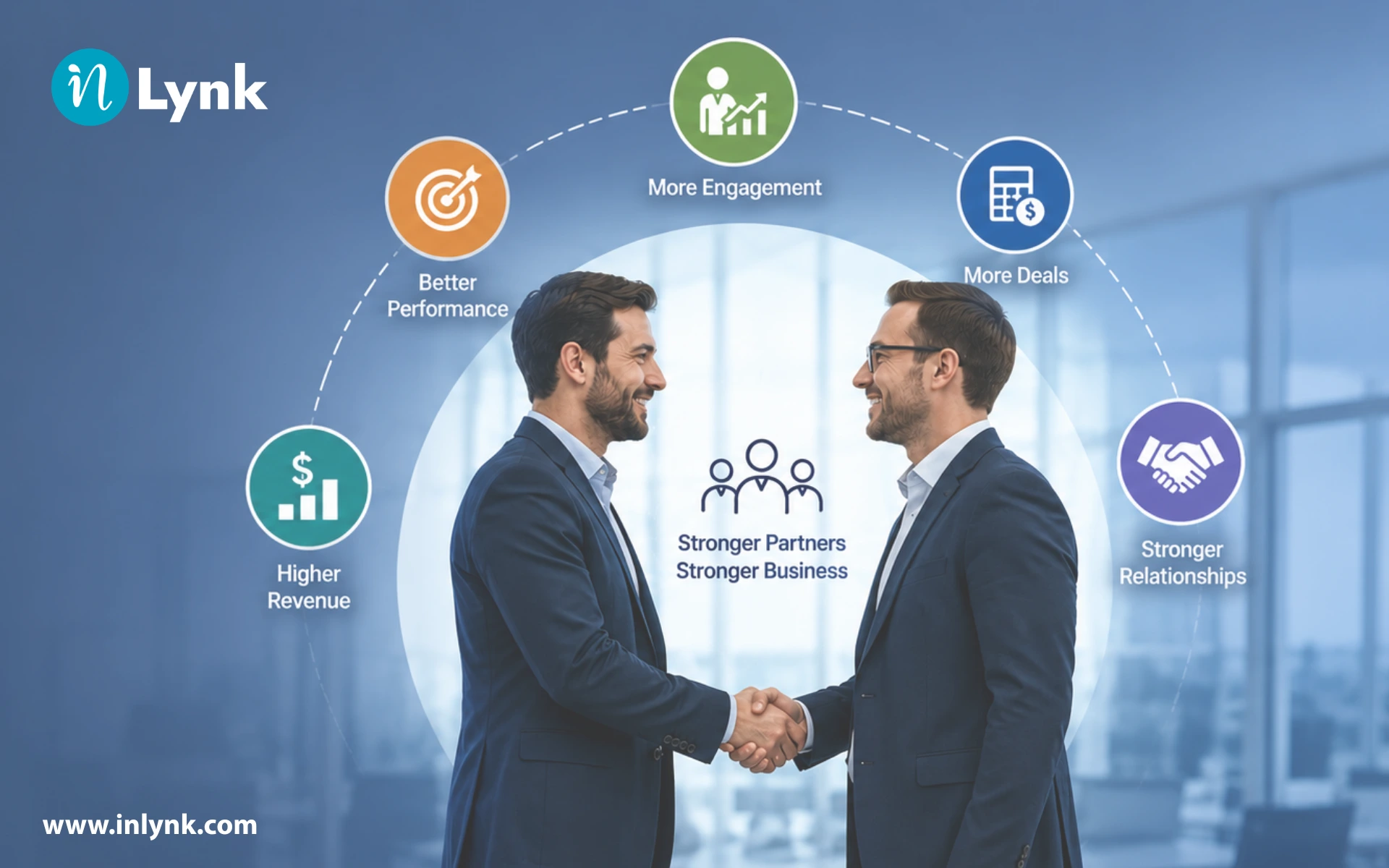
Channel partner engagement is the ongoing process of motivating, enabling, and supporting your resellers, distributors, and affiliates so they actively sell your product. Engaged partners close more deals, generate more qualified leads, and stay loyal longer making it a direct driver of B2B revenue growth.
Table of Contents
- Why Most Partner Programs Quietly Fail
- What Is Channel Partner Engagement? (And What It Isn’t)
- The Business Case: Why Partner Engagement Drives Revenue
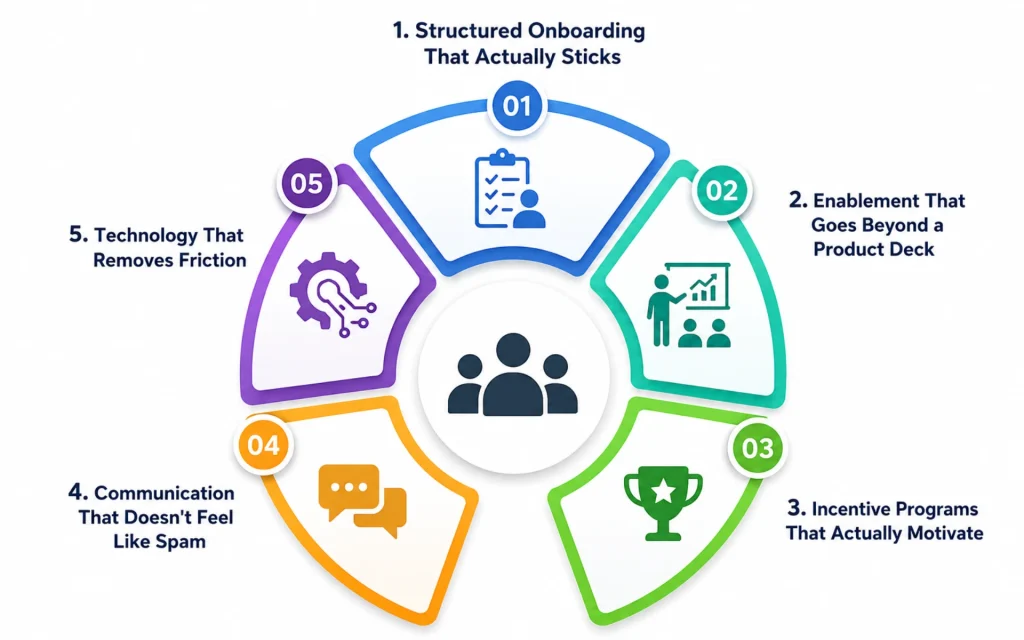
- The 5 Core Pillars of Channel Partner Engagement
- Structured Onboarding That Actually Sticks
- Enablement That Goes Beyond a Product Deck
- Incentive Programs That Actually Motivate
- Communication That Doesn’t Feel Like Spam
- Technology That Removes Friction
- Partner Engagement vs. Partner Enablement: What’s the Difference?
- How to Measure Channel Partner Engagement
- Common Channel Partner Engagement Mistakes (And How to Fix Them)
- A 90-Day Partner Engagement Quick-Start Plan
- Frequently Asked Questions (FAQ)
Why Most Partner Programs Quietly Fail
You built a partner program. You signed agreements, set up a portal, and ran a kick-off webinar. Six months later, 80% of your partners have logged in exactly once.
Sound familiar?
This is the partner engagement gap and it’s more common than most vendor companies admit. According to research from Forrester, nearly 70% of channel partners say they feel under-supported by the vendors they represent. That lack of support translates directly into lost pipeline.
The problem isn’t the partners. It’s the program.
Most partner programs are built around enrollment, not activation. Companies measure how many partners they sign, not how many partners actually sell. Fixing this starts with understanding what partner engagement really means and what it looks like in practice.
What Is Channel Partner Engagement? (And What It Isn’t)
Channel partner engagement is the quality and consistency of your partners’ active participation in your sales and marketing ecosystem. It’s not just login frequency or email open rates. True engagement shows up as:
- Partners proactively pitching your product without being nudged
- Partners attending your enablement sessions and applying what they learn
- Partners providing feedback that helps you improve your program.
- Partners renewing and expanding their relationship with your brand year over year.
Contrast that with low engagement, which looks like:
- Partners who signed up but never registered a deal
- Partners who ask basic product questions your onboarding already answered
- Partners who sell your competitor’s solution because it was easier to position
The difference between these two scenarios isn’t luck. It’s how deliberately you’ve designed your partner experience strategy.
Want to build an engagement strategy from scratch? Need help implementing this strategy in your workplace? Reach out to our experts.
The Business Case: Why Partner Engagement Drives Revenue
Before investing in an engagement overhaul, you need to know the ROI.
Here’s what the data says:
- Partners who go through structured onboarding and ongoing training close deals 3x faster than untrained partners, according to the Partner Relationship Management (PRM) industry benchmark report.
- Companies with highly engaged partner networks report partner-sourced revenue accounting for 20–40% of total revenue (Source: Gartner, 2023 Channel Strategy Report).
- Harvard Business Review found that B2B companies with strong partner ecosystems grow revenue 1.7x faster than those relying primarily on direct sales.
These aren’t small gains. For a SaaS company doing $10M ARR, a 20% improvement in partner-sourced pipeline can add $2M+ without a single new sales hire.
The 5 Core Pillars of Channel Partner Engagement
1. Structured Onboarding That Actually Sticks
Most partner onboarding is a PDF dump. A folder of product sheets, a login to a portal, and a “good luck.”
High-performing vendors treat onboarding like a product experience. That means:
- A defined onboarding path with milestones (first deal registered, first co-marketing asset used, first QBR completed)
- Role-based training — separate tracks for sales reps, pre-sales engineers, and marketing contacts at the partner organization
- A dedicated partner success manager for the first 90 days
The goal of onboarding isn’t to transfer information. It’s to create a first win. Partners who register a deal within their first 60 days are significantly more likely to become long-term, active contributors to your channel.
Read more on how to enhance your partner experience strategy to build an onboarding path that sticks from day one.
2. Enablement That Goes Beyond a Product Deck
Partners sell multiple vendors’ products. They’ll default to whatever is easiest to explain and easiest to win.
If your product requires expertise to sell, you have to build that expertise inside your partner’s team. This goes beyond a static knowledge base.
Effective enablement includes:
- Live deal coaching sessions where your team works alongside partner reps on active opportunities.
- Competitive battle cards that help partners win against alternatives in real conversations
- Certification programs that give partner reps a credential they’re proud to display
- Regular product update briefings so partners never feel caught off-guard by changes
One practical benchmark: top-performing vendors run at least one partner-facing enablement touchpoint per month, whether that’s a webinar, a live Q&A, or a new playbook drop. Salesforce’s partner enablement model is a widely cited example of this done at scale.
Want to see how leading companies run partner enablement at scale? Book a personalized demo.
3. Incentive Programs That Actually Motivate
Incentives work but only when they’re tied to the right behaviors.
Most vendors run a simple rebate: sell X, get Y% back. That’s fine for large distributors with finance teams that care about margin. It does almost nothing for a small boutique partner whose sales reps are motivated by recognition, not quarterly rebate checks.
The most effective partner incentive programs layer multiple types of motivation:
| Incentive Type | Best For | Example |
|---|---|---|
| Revenue rebates | Large distributors, VARs | 3% back on quarterly targets |
| SPIF (Sales Performance Incentive Fund) | Individual partner reps | $500 gift card per closed deal |
| MDF (Market Development Funds) | Marketing-active partners | $5,000 co-marketing budget |
| Recognition programs | All partners | “Elite Partner” status, co-branded success stories |
| Early access | Strategic partners | Beta features, roadmap previews |
The key is segmenting your partner base and matching incentives to what each type of partner actually responds to. A $100 SPIF won’t move a partner rep at a Fortune 500 SI. But it absolutely can motivate a rep at a 10-person MSP.
According to Channeltivity’s partner program research, companies that use tiered incentive structures see up to 32% higher partner activity rates compared to flat rebate programs.
4. Communication That Doesn’t Feel Like Spam
Partners tune out vendor emails fast. If every message is about your new product feature or another webinar invite, your open rates will crater.
The best partner communication strategies treat partners like a distinct audience — not a subset of your marketing list.
That means:
- Segment partner communications by tier, region, and activity level
- Share business intelligence — market trends, customer pain points, competitive shifts — that helps partners sell, not just understand your product.
- Celebrate partner wins publicly — a brief case study or social shoutout goes further than a thank-you email
- Create feedback loops — regular partner pulse surveys (5 questions, quarterly) that you actually act on.
When partners feel heard, they feel invested. That’s the difference between a vendor and a partner.
5. Technology That Removes Friction
If your partners have to jump between five different tools to register a deal, find sales collateral, check their pipeline, and request MDF — they won’t. They’ll just not do it.
Partner engagement platforms (also called PRMs Partner Relationship Management tools) consolidate these workflows into a single experience. The right platform should:
- Give partners a clean deal registration and pipeline view
- Surface relevant content based on the partner’s tier and specialty
- Automate co-marketing workflows and fund requests
- Track engagement metrics so your team can proactively reach out to at-risk partners.
The technology isn’t the strategy — but bad technology kills good strategy every time.
Skip the manual work and automate your partner engagement. Try our tool for free.
Find out how to choose the right partner engagement platform for your business needs — including what features actually matter vs. what’s just marketing noise.
Partner Engagement vs. Partner Enablement: What’s the Difference?
These two terms get used interchangeably, but they mean different things — and confusing them leads to gaps in your program.
| Partner Enablement | Partner Engagement | |
|---|---|---|
| Definition | Giving partners the skills and tools to sell | Keeping partners motivated and active over time |
| Time horizon | Onboarding + ongoing training | Continuous, relationship-based |
| Success metric | Certification rates, deal knowledge scores | Deal registration volume, MDF usage, NPS |
| Owned by | Partner success / enablement team | Channel managers + marketing |
| Example activity | Sales training webinar | SPIF campaign + partner recognition event |
Both are essential. Enablement without engagement creates knowledgeable but inactive partners. Engagement without enablement creates enthusiastic partners who still can’t close deals.
How to Measure Channel Partner Engagement
You can’t improve what you don’t measure. Here are the metrics that actually signal partner health:
Activity Metrics (Leading Indicators)
- Portal login frequency (weekly/monthly active partners)
- Deal registration rate (% of partners who have registered at least one deal in 90 days)
- Content consumption (which assets partners are actually using)
- Training completion rates
Pipeline Metrics (Lagging Indicators)
- Partner-sourced revenue (deals originated by partners)
- Partner-influenced revenue (deals where partners played a role)
- Partner average deal size vs. direct average deal size
- Partner win rate
Relationship Metrics
- Partner NPS (Net Promoter Score) — survey quarterly
- Partner churn rate (how many partners go inactive or leave annually)
- Tier advancement rate (partners moving from Silver to Gold, etc.)
A healthy partner program typically targets 40–60% of registered partners as “active” in any given quarter. If you’re below 30%, your engagement strategy needs immediate attention.
Common Channel Partner Engagement Mistakes (And How to Fix Them)
Mistake 1: Treating all partners the same Sending the same email, the same incentive, and the same resources to a top-tier SI and a one-person consultancy doesn’t work. Segment your program and tailor your approach.
Mistake 2: Only communicating when you need something If partners only hear from you when you want pipeline updates or deal renewals, they feel used. Build regular touchpoints that add value for them.
Mistake 3: Measuring inputs instead of outputs Counting how many training sessions you ran doesn’t tell you if partners can sell. Track deal registrations, conversion rates, and revenue.
Mistake 4: Ignoring the “dark middle” of your partner base Most companies over-invest in their top 10% of partners and ignore the middle 40–50% who have real potential. A well-structured partner engagement platform can help you identify and activate this segment systematically.
Mistake 5: No feedback loop Partners who feel unheard leave — or worse, stay inactive. Build structured ways to collect and act on partner feedback at least quarterly. Tools like Typeform or SurveyMonkey make quarterly partner pulse surveys fast to deploy.
A 90-Day Partner Engagement Quick-Start Plan
If you’re starting from zero or rebuilding a struggling program, here’s a practical first quarter:
Days 1–30: Audit and Segment
- Pull data on your current partner base: who has logged in, who has registered deals, who has been silent for 90+ days
- Segment into Active, At-Risk, and Inactive buckets
- Identify your top 20% and your most promising “sleeper” partners
Days 31–60: Activate
- Launch a targeted re-engagement campaign for at-risk partners (personal outreach, not mass email)
- Run a SPIF for the next 30 days to create short-term momentum
- Schedule QBRs (quarterly business reviews) with your top 20%
Days 61–90: Build Systems
- Document your onboarding path and standardize it — use the partner experience strategy framework as a starting reference.
- Create a partner communication calendar (what goes out when, to whom)
- Choose and configure your partner engagement platform
- Set your baseline metrics so you have something to improve against next quarter.
Ready to put this plan into action? Book a personalized demo and we’ll walk through what this looks like for your specific partner program.
Frequently Asked Questions
What is channel partner engagement?
Channel partner engagement is the process of actively motivating and supporting your resellers, distributors, and affiliates to sell your product. It includes training, incentives, communication, tools, and relationship-building — all designed to keep partners active and producing revenue.
How do you measure partner engagement?
The most reliable metrics are deal registration rate, partner-sourced revenue, portal login frequency, and partner NPS. A partner who logs in, registers deals, and gives you a high NPS score is an engaged partner. A partner who hasn’t registered a deal in 90 days is a disengaged one.
Why does partner engagement matter for SaaS companies?
For B2B SaaS companies, partner channels can account for 20–40% of total revenue when managed well. Partners extend your geographic reach, add credibility in new verticals, and reduce customer acquisition costs. Poor engagement wastes that potential. See how the channel partner ecosystem is evolving in 2026 for the latest data.
What is a partner engagement platform?
A partner engagement platform (or PRM — Partner Relationship Management software) is a tool that centralizes deal registration, content sharing, training, incentive tracking, and communication in one portal. It reduces friction for partners and gives vendors visibility into partner activity. Read our full breakdown of choosing the right platform.
How often should you communicate with channel partners?
At minimum, once a month with valuable content (not just product updates). Top-performing vendor programs maintain weekly or bi-weekly touchpoints with their highest-tier partners, and run quarterly business reviews to align on goals and performance.
Leave a Reply